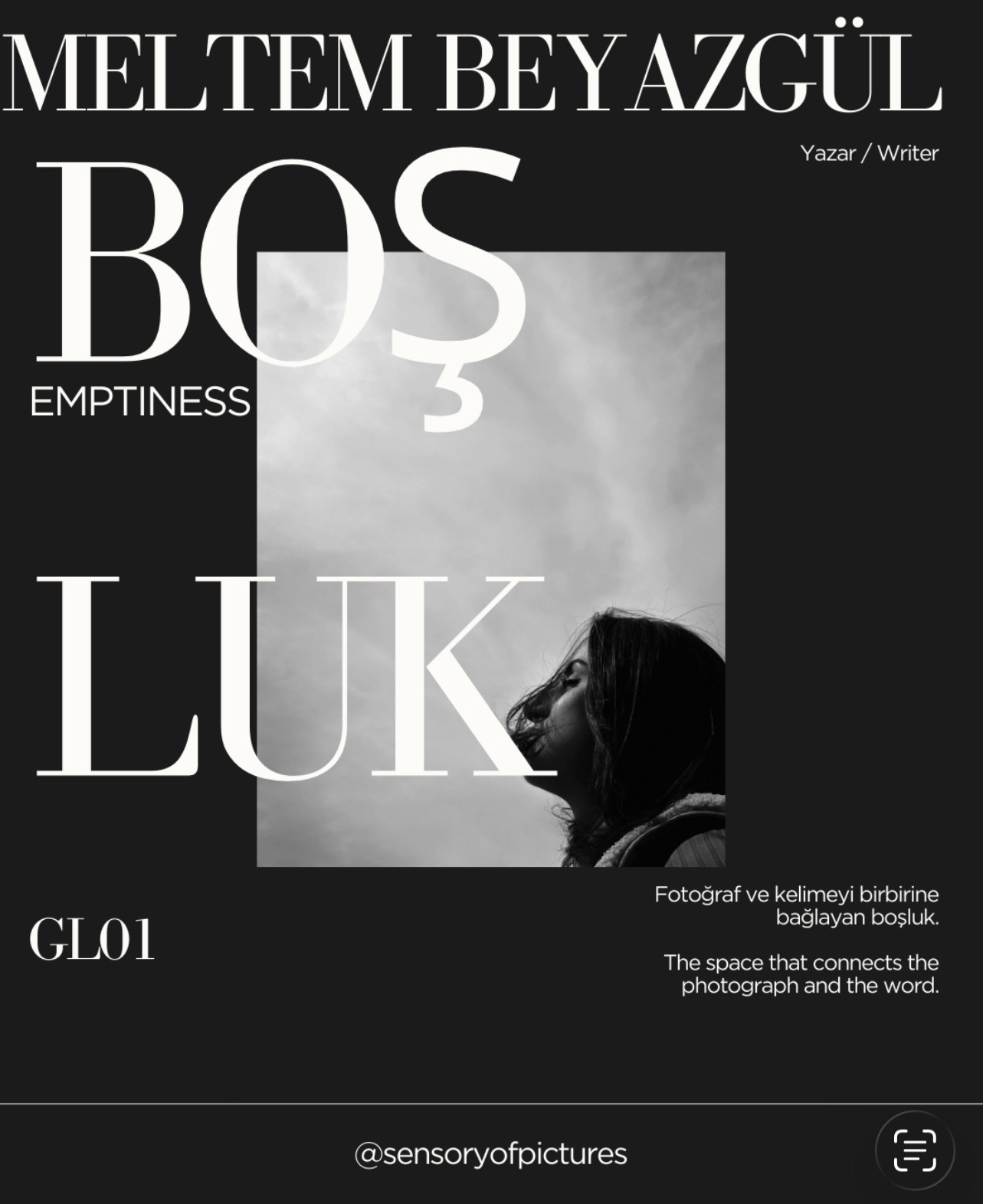
Meltem BEYAZGÜL
Is emptiness a lack, or is it intentional?
Emptiness is never truly a lack. What we call empty space actually contains invisible elements such as microscopic particles, gases, and clusters of light. If we are referring to a space that does not restrict our visual or sensory movement, then we may speak of “emptiness”—which is, in fact, a flexible field of movement shared with countless micro-particles.
Yes, emptiness can be left intentionally. Yet despite all efforts, emptiness remains something that can never be fully filled; it is a constellation of unresolved images containing millions of possibilities. It creates a kind of playground for the imagination. At times the mind fills the image, while other imagined elements quickly take their place as well. To see emptiness as deficiency is merely the illusion of a mind that cannot construct meaning—because in essence, emptiness is unfilled depth, a creative space left for the mind.
Where does writing begin to speak when photography falls silent?
Translating a photograph into writing is not merely describing it; rather, it is giving voice to the perception it creates, the feelings it directs, and the emotional associations it evokes. A photograph freezes a moment into a single frame, while writing completes it within the context of both the moment and the memory, breathing a kind of continuity into it.
Therefore, looking at a photograph and interpreting it are entirely different acts. For example, the dried tree in a photograph may represent, for one interpreter, an exhausted life unable to breathe through its roots; for another, its upright trunk may symbolize resistance against death. Looking is not the same as seeing.
For a photographer, framing, angle, and light are as essential as word choice, storytelling, and implication are for a writer. (What are you looking at? What do you see? What do you wish to reveal?) The emptiness in a photograph turns into implication in writing. This is the part that requires the labor of the “third eye.” Is it not art itself that is completed when one becomes silence where the other becomes speech?
How do light and shadow in a photograph represent the central conflict of your text? What truth does the light reveal, and what secret does the shadow conceal?
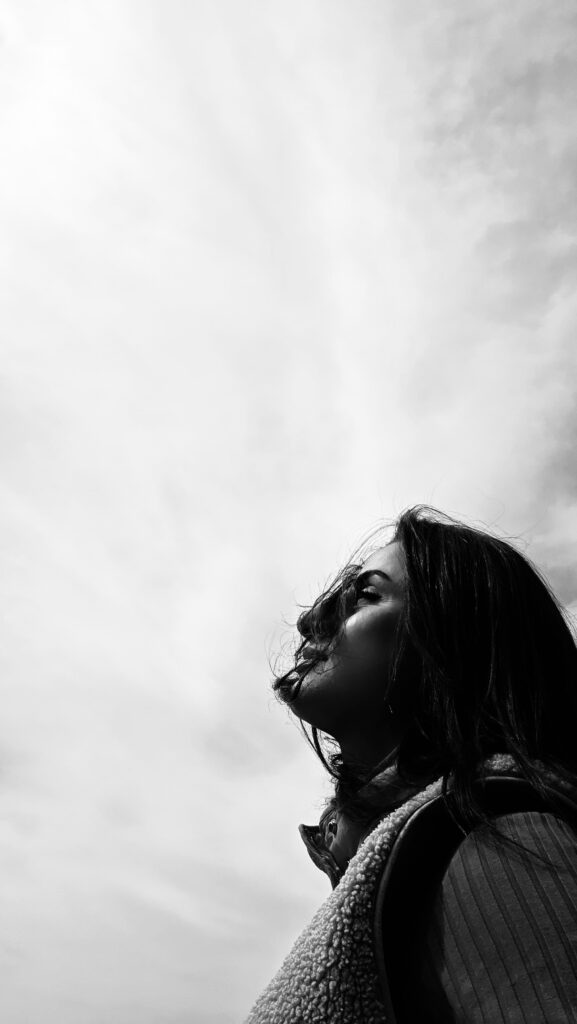
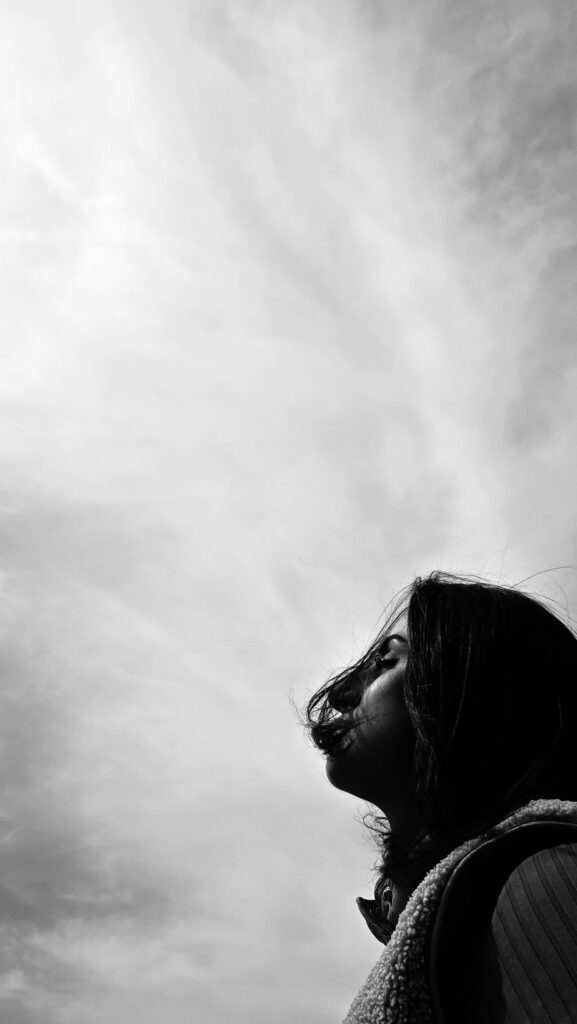
Light is a kind of veil over matter. It rarely shows things exactly as they are; it enlarges, diminishes, or blurs them. It creates hesitation, as if one were watching a reflection in water. The photographer’s mastery appears precisely here. The momentum of their perspective reflects so strongly in the frame that the veil between them is suddenly lifted.
Colors, too, receive their share from the reflection of light. We love the colors of summer; they carry a childish joy, a playful recklessness. Yet to me, true emotion and depth appear more clearly in the colors of winter. They offer a quieter tone, revealing the substance of things more fully by completing them with shadow.
I would describe my connection with literature this way: the play of light and shadow in a photograph becomes a playground of words for the writer. While the text moves along its main line, it creates uncertainties that may lead it off course. These are the parts where writing is shadowed, where implication creates a play of light, where the narrative ends with an ellipsis.
A good writer does not prefer to present a narrative in which everything is laid bare; instead, they leave deliberate spaces. For thoughts that cannot be grasped too quickly, the writer also expects effort from the reader.
You will often encounter deeper themes rather than a festive tone in my texts. Because true emotions —like the solitude of winter — appear when the surface of life grows quiet and the crowds withdraw. When you remain alone with your own self, moments begin to flow before your eyes like photographic frames. While the mind forms the image, it also tries to capture and interpret the emotions hidden in its shadows. Details become clear later.
A lens directed into depth is a treasure offered to those willing to search for it. Dimness is indispensable— to the return to one’s “self”, to the depth of a photographic frame, and to literature.
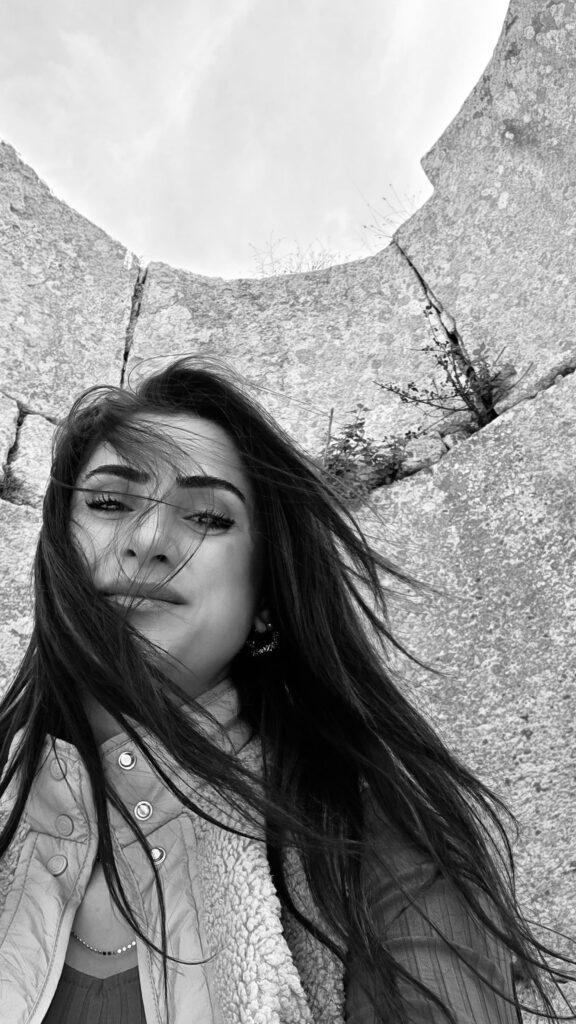
The photograph I chose was a very precious moment that I wanted to remember. I wish it had been captured through the lens of a skilled photographer; I am sure it would have become a far stronger image. In this photograph, rather than discussing the balance of light and composition, I will try to convey the feeling of the image from a writer’s perspective, in a brief reflection:
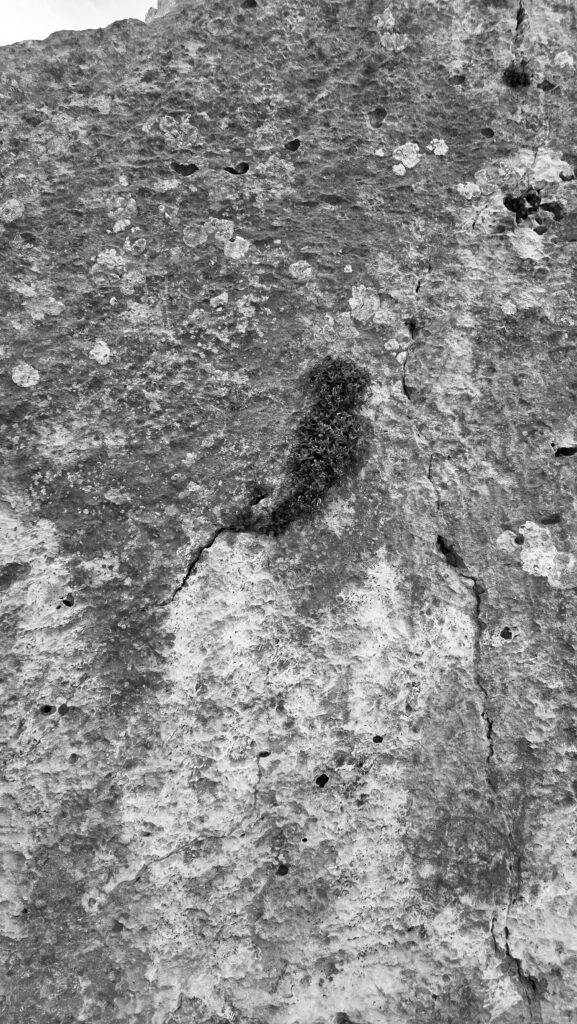
“I am in a ruined, ancient monastery. As I wander through it — thinking, imagining — I come across a wild herb that has found life upon a rock. You would be surprised to see it. Not the columns, not the thick walls, not the lives once lived by the monks — none of these astonished me as much as that fragile plant. I stood there for a long while, simply looking.
I believe it offers the most beautiful summary of the resistance required to live — for those who can understand it.
To live is, in some way, to be wild and fierce. It is to plant one’s own flag, to set one’s own rule. Among countless possibilities, it is the miracle of being the seed that settles on that rock with a one-in-a-million chance. That small patch of soil might have been like a cell rushing toward the womb for the seed. And luck — the water that begins life…
Stubbornness: clinging madly to the little soil hidden within the great rock.
And the reward: to gaze at the most beautiful view from the most beautiful place.
This is life beginning again from the most impossible place.”