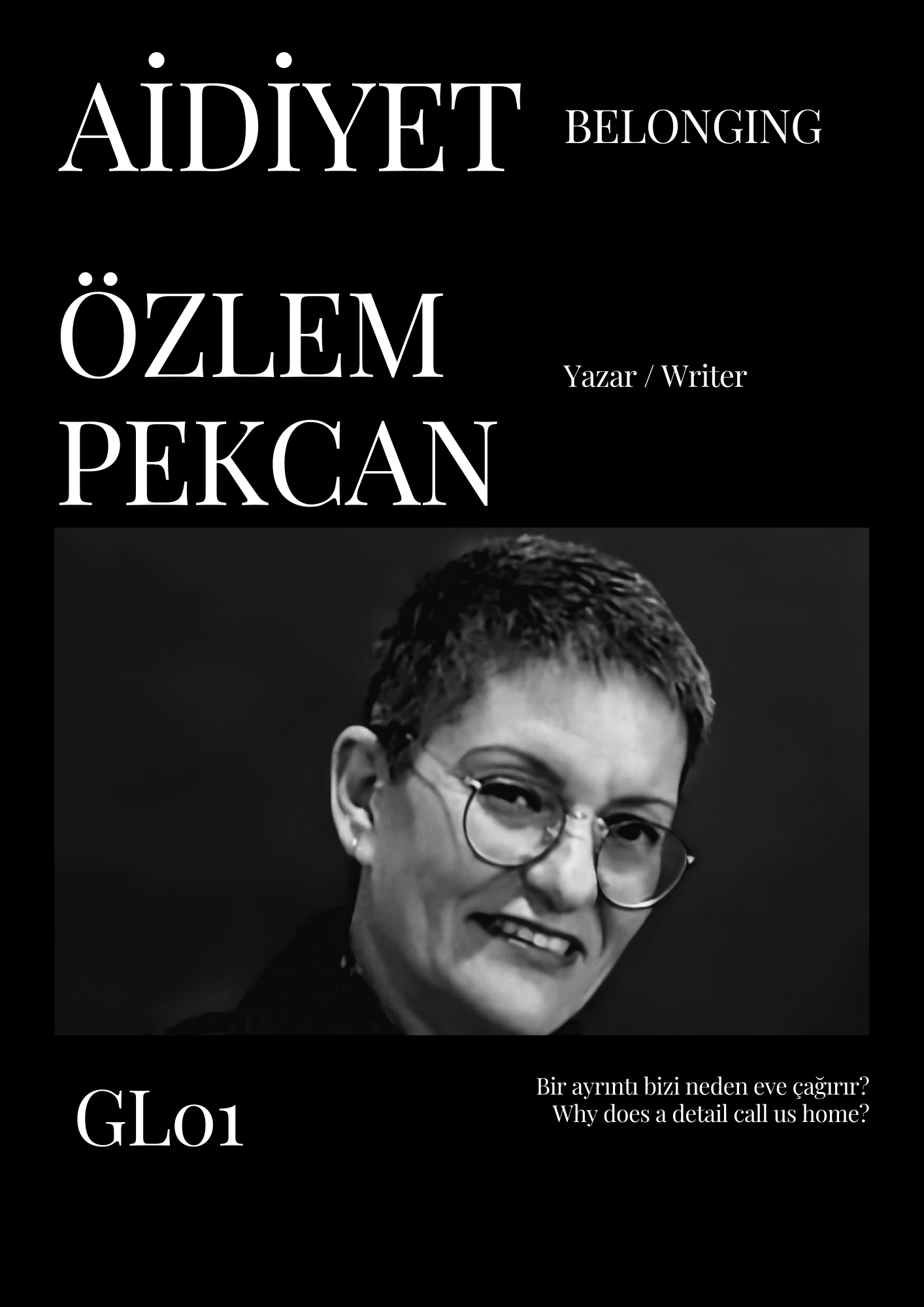
Özlem PEKCAN
Is belonging a place or a state of being?
To me, belonging is both a place and a state. For example, the dog in the photograph—whom we call “Beyaz.” As is often seen in many picnic areas, he was probably adopted shortly after birth and then, toward the end of that summer season, perhaps abandoned in nature because he had grown up or had become difficult to care for. As a result of these actions—carried out beyond his own will—he must have experienced his first sense of belonging during the time he was becoming conscious of the world. The emotional bond he formed with those who looked after and fed him most likely made him feel included in that group, and he probably came to accept the place he lived in as his own.
But what happened when he was abandoned? Inexperienced about the outside world, unaware of the hardships of survival, he must have found himself alone in the middle of nature—left only with the instincts that nature itself had given him. Who knows how helpless and vulnerable he must have felt! And how heartbroken he must have been because of the betrayal of those who had once been his home.
When we first met Beyaz—whom we recognized by the pink, heart-shaped spot on his nose—it was again summer, and he was far younger than in this photograph, not even fully grown. He didn’t even have a tag in his ear. Out of necessity, he had shifted his sense of belonging to the outdoors—made up of the sea, sand, and summer houses—and since he had managed to stand on his own, he had embraced it. Moreover, he had adopted and governed another state of belonging as well. Beyaz had acquired his own chosen forms of belonging—like our garden in this photograph.
He formed a bond with us, accompanied our children home through the darkness of night, and whenever he sensed a threat, he was always the first to step ahead of us. Over the years, his appearing nearby every time we arrived or returned, the way his tail wagged as he swayed in a rhythm fitting his body and settled himself on the stones in front of the garden gate, and how he would disappear again after being fed—only to return the next sunset in the same rhythm—all these could be seen as signs, even rituals, of the belonging he felt.
Beyaz also has other doors and other people who call him by different names. Perhaps he moves from one state to another, from one belonging to the next, as many times as there are doors and names, throughout the seasons. Though being adopted and abandoned happened beyond his will, every belonging that followed became his own choice. In truth, he is now both the one who adopts and the one who abandons.
From adulthood to maturity, Beyaz has grown old. In recent years we always carry the same hesitation within us: will he greet us again this summer? Of course, like all living beings, a moment will come when he must submit to the rule of nature. When that time arrives, our pink-nosed companion will surrender to another belonging, another state—one none of us knows, yet one that awaits us all.
Where does belonging begin?
I believe attributed belonging begins with creation itself. The moment a being is created, it finds that a garment of belonging—tailored like a second skin—has already been placed upon it. For instance, dogs acquire countless forms of belonging the moment they open their eyes: species, gender, geography, economy, place, and many other factors shape them. This rule does not change for other forms of existence, whether living or non-living. Yet when someone attributes belonging to another, especially in conscious beings, it does not necessarily mean that the belonging will be felt or embraced.
Even if the self initially accepts the sense of belonging that comes from its essence, with every new experience it revisits this notion—examining it, processing it, confirming or rejecting it, and eventually reshaping it according to its own nature, purpose in life, personality, and expectations. To me, this is acquired belonging—and true belonging begins here. At this point, rather than molds, norms, and obligations, free will, the ability to decide, and above all, the worlds of feeling and thought come into play.
Beyaz’s situation is no different from what I described above. After being torn away from the forms of belonging imposed upon him before he had even gained consciousness, he managed to cope with nature—unstable (because summer brings abundance while winter brings scarcity), dangerous, and full of risks of every kind (conflicts with his own species and other wild animals, harsh weather conditions, heat, cold, and so on). After that, he made decisions of his own will, made choices, and created new belongings.
In short, belonging begins in two ways: the first by being attributed, the second by being acquired.
Is belonging a trace?
Belonging leaves traces. Not every belonging is positive, desirable, or good. There are also negative, unwanted, and painful forms of belonging. External forces may compel belonging, just as they may compel abandonment. And sometimes a created being clings stubbornly to belonging, regardless of what it is or how it came to be. Since almost every belonging is directly connected to lived experiences, it inevitably leaves a trace in the climate where it reigns. Sometimes these traces are clear enough to leave no room for interpretation; sometimes they are like a faint breeze—but they are always there.
Beyaz’s leisurely wandering into our garden from whichever side he wishes, the steady movement of his tail, or the way he stretches himself comfortably right in front of the faucet—these are important signs of the belonging he feels toward us and our place. We can easily follow the traces in his behavior and draw conclusions. We may confidently say that he is content, that he feels safe, that he carries a certain fearlessness, even a carefree boldness.
Yet understanding the depth in his eyes, the occasional sadness and mist that appear in them, is not nearly as easy. Which belonging leaves such deep traces, after all? Which belonging saddens him, which one makes him weep? Are the painful experiences of his past belongings finding their way from his heart to his eyes? Or are they the uncertain anxieties of the future tied to his present ones?
We cannot know.